

In this article
NVIDIA announces Nemotron for Science at SC26 in Chicago
At SC26 in Chicago, NVIDIA announced Nemotron for Science, a package for building research agents that run on the researcher's own hardware. The same event brought the Rubin HPC GPU, an expanded Vera CPU platform for high-performance computing, and a quantum co-design effort with IBM and Fermilab.
Nemotron for Science, Rubin HPC and the quantum platform in detail
- Nemotron for Science packages the open Nemotron 3.5 Super VL model with a new open chemistry dataset and recipes for further training in life sciences and chemistry.
- Nsight AI Porting Agent is a new NVIDIA agent that moved a routine from the Weather Research and Forecasting (WRF) model onto GPUs.
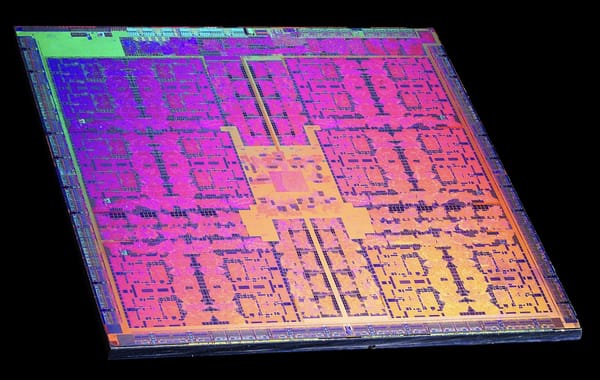
- Rubin HPC is a GPU in the Vera Rubin platform for science, engineering, analytics and AI, with precisions from FP64 to FP4, sparse-data acceleration and seventh-generation NVLink.
- Vera CPU platform is expanded for HPC; Ian Buck said agents need CPUs to run tool calls between model steps.
- Quantum co-design is a planned NVIDIA, IBM and Fermilab platform for error-correction and applications research, pairing DGX B200 systems with IBM quantum computers, including IBM Quantum Nighthawk machines.
- TCBP-JOBS is a new decoding algorithm for CUDA-Q.
Vera CPU wins: DKRZ and TACC
The German Climate Computing Center (DKRZ) chose Vera CPUs for its HLRE-5 supercomputer, expected in early 2028. It joins Vera systems already announced at the Texas Advanced Computing Center.
NVIDIA's own figures for the agents, Rubin HPC and photonics
Each figure below is NVIDIA's own claim or was stated by NVIDIA's Ian Buck.
- An Argonne National Laboratory agent built with the toolkit took one prompt, planned and tested hypotheses, chose simulations and found two new binding sites, NVIDIA says.
- A KTH Royal Institute of Technology agent that repairs broken GROMACS setups fixed 81% of test cases in one overnight run on a single DGX Spark, according to NVIDIA.
- NVIDIA says the Nsight AI Porting Agent sped up the WRF routine more than 5x, using about 150 million tokens.
- Buck said Rubin HPC has more than 50,000 CUDA cores, about three times as many as Hopper.
- Buck said TCBP-JOBS cuts error-correction research computation from 12 weeks to 45 minutes, and the goal is to bring decoding latency from about 300 microseconds to 10.
- A simulation on Jülich's JUPITER supercomputer showed that magic state cultivation can cut the operations for one logical step tenfold, Buck said; the work is being added to CUDA-Q.
- Buck said NVIDIA Photonics co-packaged optics switches, in an early deployment at Lambda, are 15x more reliable on bit errors and link flaps.
Running Nemotron for Science on your own hardware
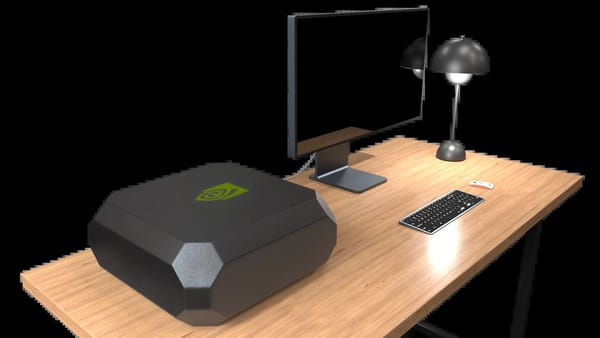
According to Buck, Nemotron for Science can run locally on a DGX Spark, a workstation or the researcher's own supercomputer. Buck said local use is about ownership: "You own your data. You own the model."
What to take from NVIDIA's SC26 announcements
If you run a small GPU box or a DGX Spark for research workloads, Nemotron for Science is the item to follow, since it is the one aimed at local use. Treat the agent results as NVIDIA's demonstrations until someone reproduces them on your kind of workload.
What NVIDIA has not published yet
NVIDIA's post gives no price or licence terms for Nemotron for Science, the chemistry dataset or the Nsight AI Porting Agent, and no download location or release date for the model or the agent. It also gives no hardware requirements beyond a DGX Spark or workstation, and no dates for the Vera platform expansion, TCBP-JOBS or the IBM and Fermilab platform.
Sources
Image: Photo by Thufeil M on Unsplash
This story was produced with AI assistance from the sources listed above and fact-checked against them before publication. Read our editorial methodology and the corrections log. Spotted an error? Email [email protected].



Discussion